BRAINZ. articles
Read All Articles
5 Incredible Health Improvements Through Nerve Manipulation Technique
Our nervous system, if stretched out, runs a length of 80,000 kilometers (approximately 50,000 miles). At any given time we have over 7 trillion nerves. We are talking about 900 times more than the number of people on Earth. How could your nerve health not affect your entire body? After reading this article, you will better understand the nervous system and its function and fully understand and appreciate the health benefits of Neural Manipulation…
What Happens in Vagus, Definitely Does Not Stay in Vagus
You might have heard the phrase, “What happens in Vegas, stays in Vegas!” While that may be true when traveling to Las Vegas, Nevada, it does not apply when it comes to understanding our 10th cranial nerve.
“You’re Getting on My Nerves!” – 5 Signs of a Restricted Nervous System
Do you notice muscles in your arms or legs that are smaller on one side than the other? Do you have a feeling of tightness or pressure in various parts of your body? Do you suffer from constipation or GI disruptions without explanation?
You most likely have nerves throughout your body that are stuck, strained, or compressed. Most everyone has restrictions in their nervous system. It’s something we all experience but is often overlooked, misdiagnosed, or unexplained. However, there are manual techniques that can treat nerve dysfunctions.
Read More10 Easy Tips to Engage Our Nervous System to Accelerate Our Health
Understanding how our nervous system self-regulates is key to assisting and promoting vitality and health. To engage and influence the nervous system ourselves, we are affecting the parasympathetic nervous system, primarily controlled by the vagus nerve (10th cranial nerve). This is also known as the “Rest and Digest” response.
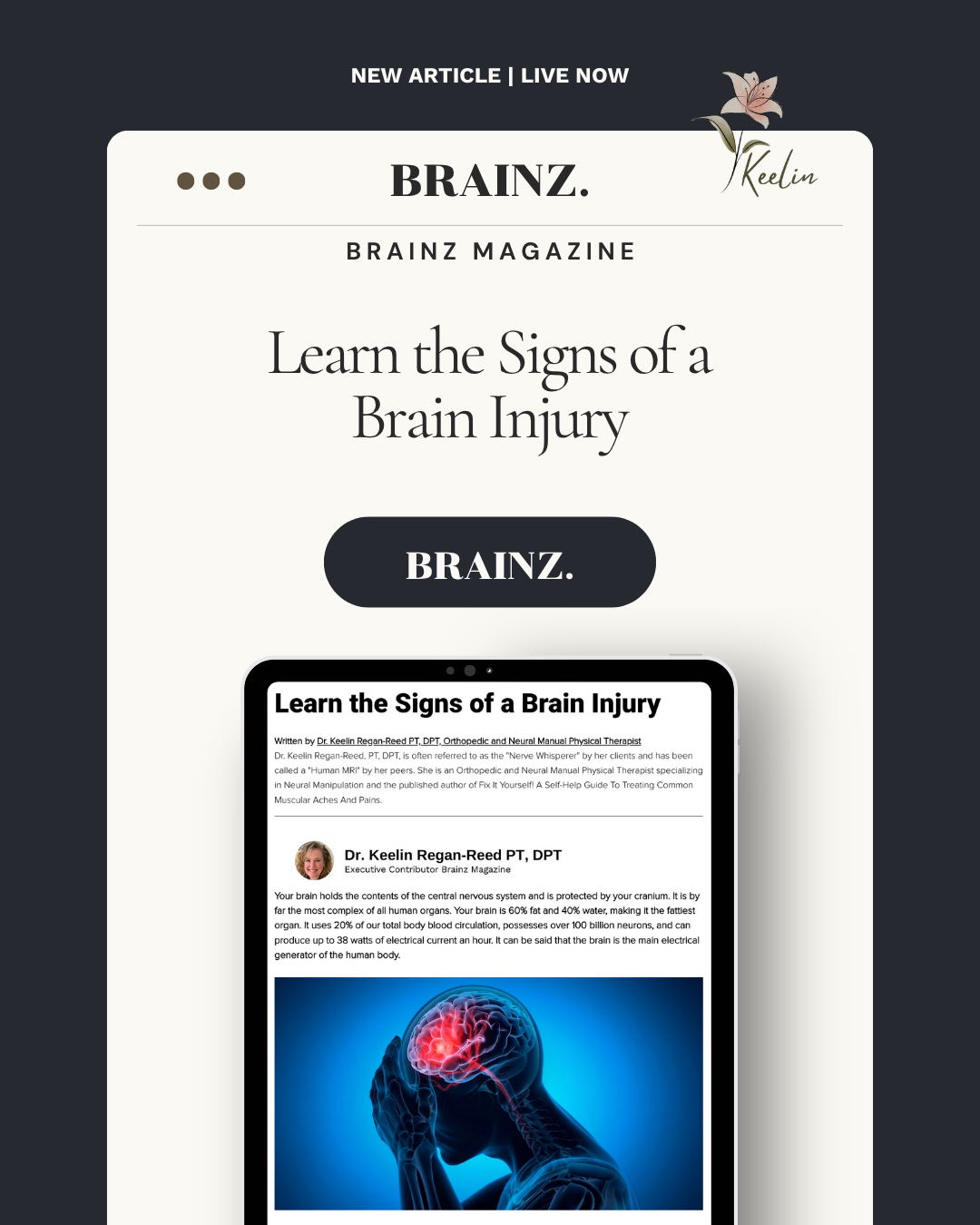
Learn the Signs of a Brain Injury
Your brain holds the contents of the central nervous system…it processes and cleans itself during sleep. It detoxifies, builds new brain cells, and flushes nutrients and blood flow. This very important homeostasis and balancing act is what helps regulate and support the rest of our body and organs.
When an injury occurs to our brain, the basic functions are disrupted and can be seriously damaged. The question is, what defines an injury or trauma to the brain? We used to think losing consciousness was the most important factor in determining a concussion or TBI (traumatic brain injury). This is not the case.
Have you experienced a head injury or concussion and not known it?
Learn the incidents that can cause head injuries that can go unnoticed, the signs you might have had a brain injury that has gone untreated, and how to protect your brain.
Read MoreYour Body’s Communication – Are You Listening?
If the human body were a workplace environment, it would be an open-plan office where everyone is trying to do their job while yelling messages at you. The muscles are over in the corner, filing complaints about posture. The gut is dramatically sighing, wondering why you ate dairy again. The brain is frantically waving a sticky note that says, “Sleep, please!” And the heart? She’s the supervisor reminding you that, yes, you do still need water to survive.
And yet, somehow, we’re experts at pretending we didn’t hear any of them. Welcome to your body, the most advanced, dramatic, high-maintenance, wildly impressive system you will ever own. And unlike a gadget, you can’t trade it in the moment it starts glitching. You’ve got to listen, maintain, and sometimes apologise to it like you do your best friend when you’ve been, well, a little neglectful.
Read the cliff-note guide to tuning into your body.